
Your home office walls do more than enclose a space, they set the tone for your entire workday. The right paint color can sharpen focus, calm anxiety, and energize motivation, while the wrong one leaves you drained by 2 p.m. Unlike trendy wall decor that comes and goes, a well-chosen paint color is a long-term investment in your productivity and comfort. Whether you’re converting a closet into a workspace or redesigning a dedicated room, selecting the best home office paint colors requires balancing psychology, light conditions, and personal preference. This guide breaks down seven proven color categories, explains the science behind them, and walks you through picking and applying your perfect shade.
Table of Contents
ToggleKey Takeaways
- The best home office paint colors are chosen based on psychology, light conditions, and personal work style—cool blues and greens promote focus, while warm neutrals energize creative work.
- Test paint samples on your walls for 2–3 days under different lighting (morning, afternoon, and evening) before committing, as the same color appears dramatically different throughout the day.
- An accent wall strategy adds visual interest and depth without overwhelming small spaces, making it ideal for home offices where every square foot counts.
- Satin finish is the practical choice for office walls because it offers durability, cleans easily, and resists dust better than matte finishes.
- Proper wall preparation—including spackling holes, priming stains, and using painter’s tape—makes up 80% of a successful paint job and prevents frustrating touch-ups.
- Paint is one of the highest-ROI improvements for your workspace, offering affordability and reversibility while creating a room that supports sustained productivity.
Why Paint Color Matters in Your Home Office
Color influences mood, attention span, and stress levels, facts backed by workplace and environmental psychology research. Warm colors like warm grays and terracottas stimulate energy and creativity, while cool blues and greens slow heart rate and promote calm focus. Your home office walls become your visual environment for 6–8 hours daily, so choosing deliberately matters far more than in a guest bedroom.
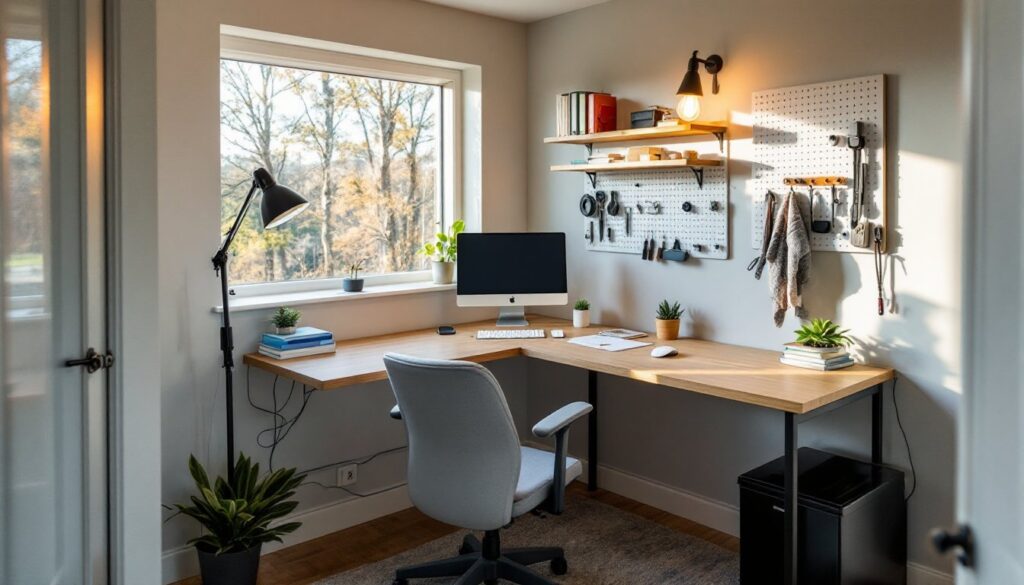
Light also plays a critical role. A cool blue that looks serene in a north-facing room with indirect light may feel cold and draining in a south-facing space with harsh afternoon sun. Before settling on a color, observe your office throughout the day, morning, midday, and late afternoon. Test large paint samples on your walls and live with them for 2–3 days. Rooms with poor ventilation or high humidity (bathrooms, basements) need mildew-resistant paint: home offices don’t usually require this, but it’s worth checking your space. Many designers recommend neutral base colors paired with accent walls or trim, a strategy that gives flexibility without overwhelming the room.
Calming Blues and Greens for Concentration
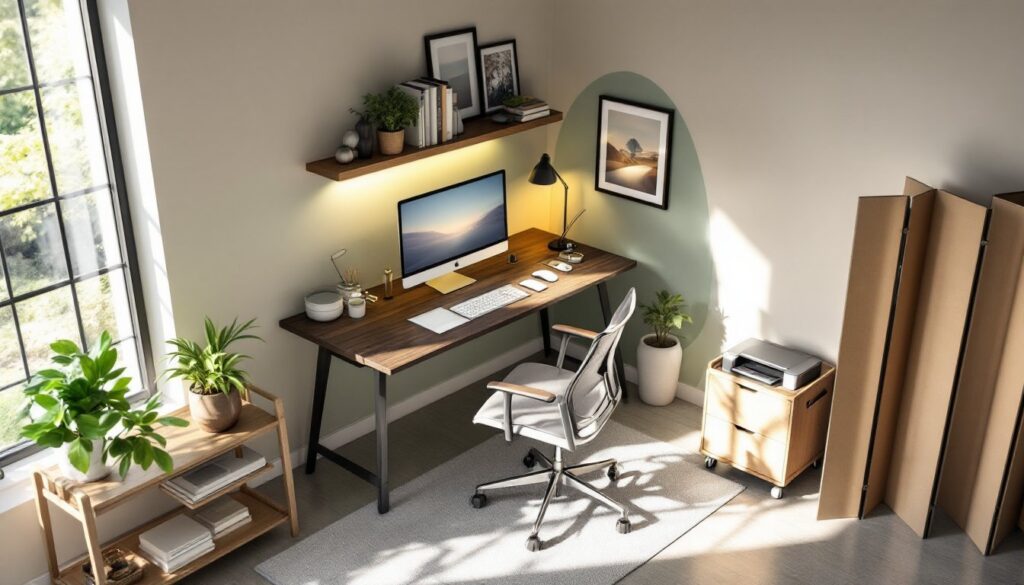
Blue is the go-to for focus-intensive work. Soft, muted blues, think spa or sky tones rather than electric navy, lower stress and support sustained attention. Sage green and soft eucalyptus tones offer similar benefits with a warmer feel, making them ideal if you find pure blue too cool. These colors work especially well in rooms with natural light: they harmonize with daylight rather than fighting it.
When choosing blues and greens, avoid overly saturated or neon versions. A paint swatch labeled “Sky Blue” might look completely different on your wall than in the store: manufacturers use different bases and finishes that shift appearance under real lighting. Matte finishes hide imperfections but can look flat in dim rooms, while satin finishes offer a subtle sheen and easier cleanup, a practical choice for office walls you’ll wipe down occasionally.
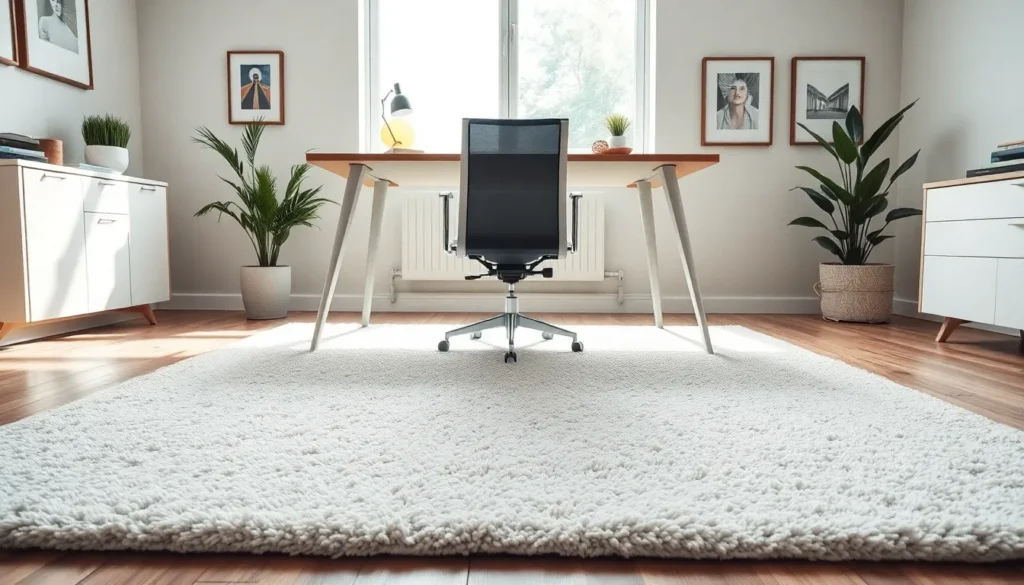
Pair calming blues with warm wood tones, soft lighting, and artwork that breaks up the monochromatic feel. A home office rug in cream, beige, or muted pattern grounds the room and prevents it from feeling hospital-like. If you’re sharing workspace, remember that blue reads as serious and professional, effective for video calls and client impressions.
Energizing Neutrals and Warm Tones
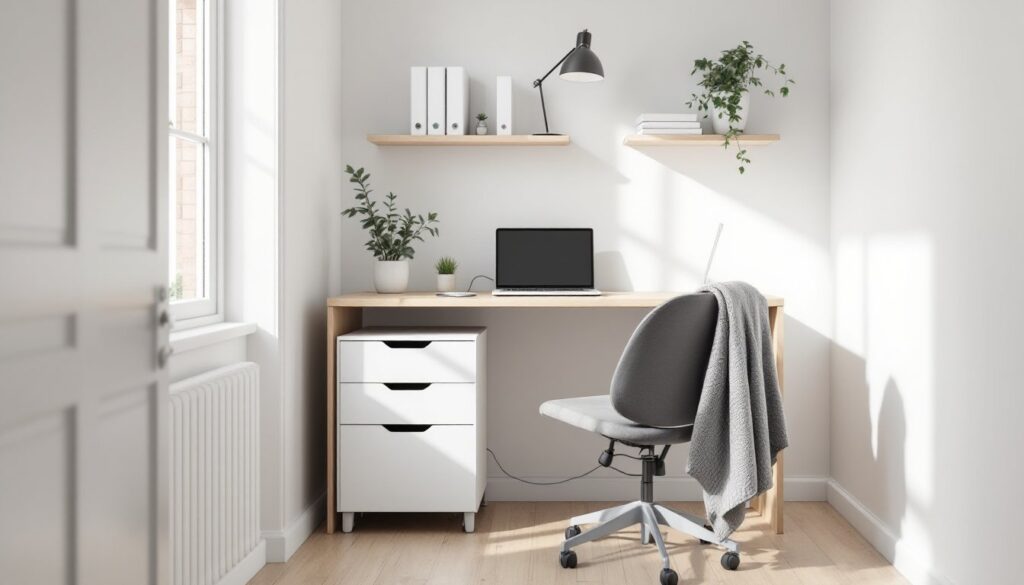
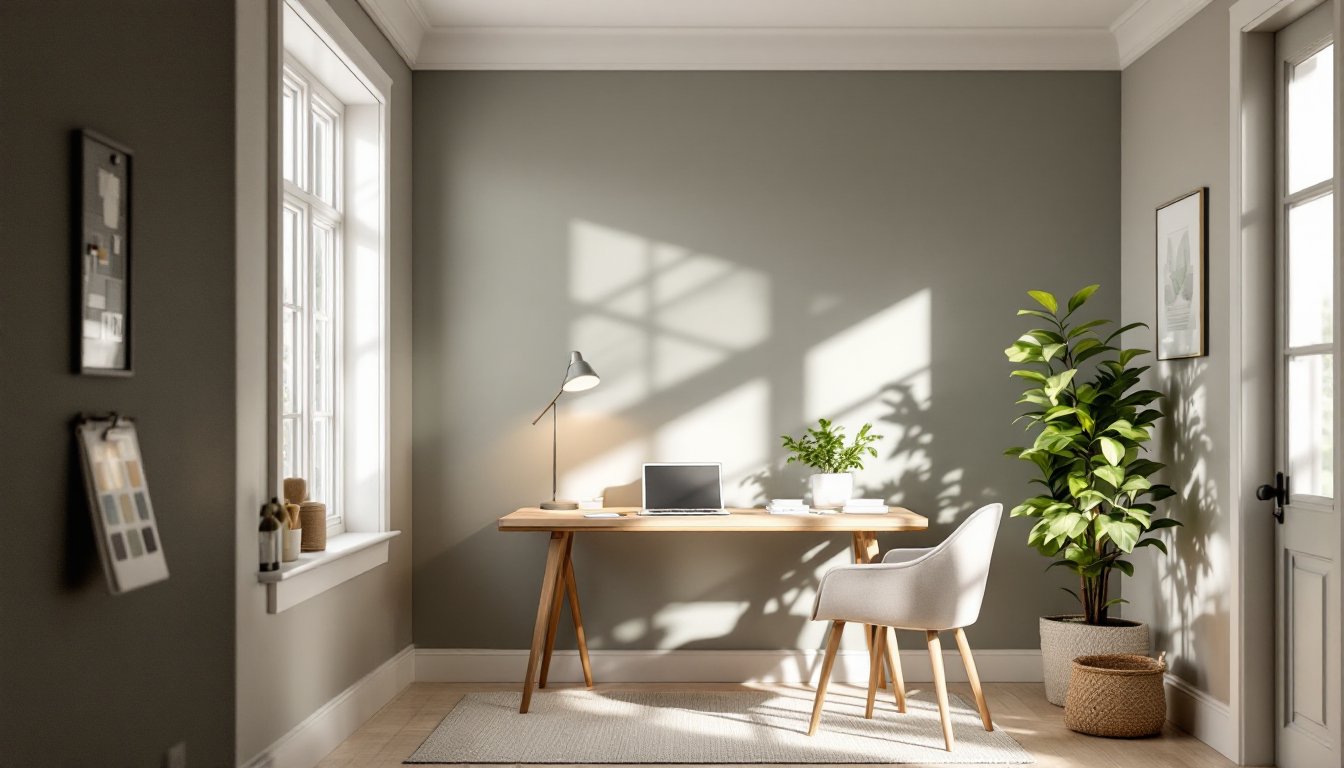
Not everyone thrives in cool, calm environments. If your work involves creative problem-solving, client interaction, or high energy, warm neutrals, warm grays, greige (gray-beige blend), soft taupe, and cream, energize without overstimulating. Warm grays contain undertones of brown, yellow, or pink, making them feel approachable and inviting. They’re also incredibly forgiving: warm gray hides dust and minor wall imperfections better than cool whites.
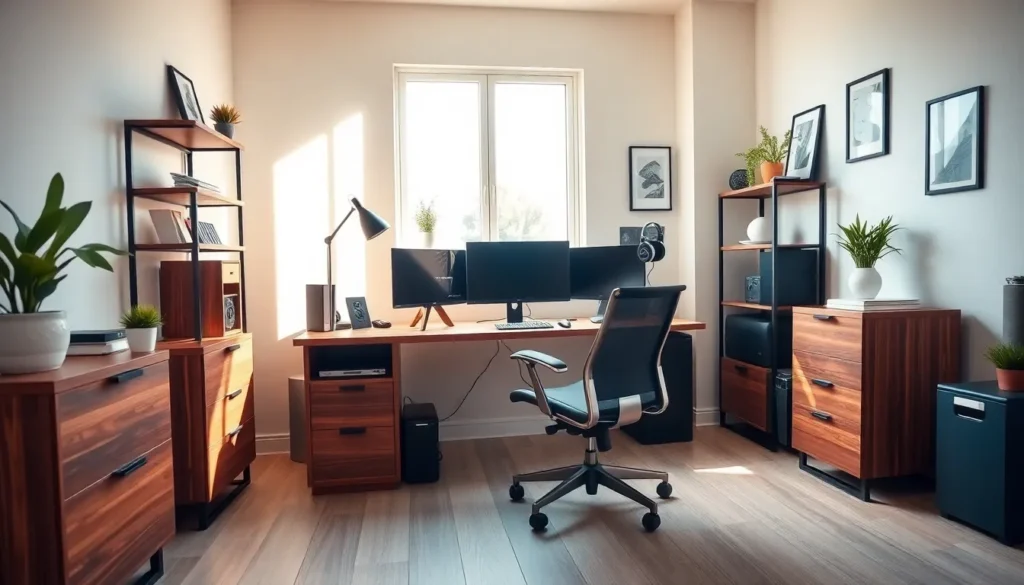
Soft terracotta, warm ochre, and barely-there blush tones are gaining popularity for home offices in 2026, especially in spaces with good natural light. These colors reference earth and are less sterile than pure neutrals. They pair beautifully with natural materials, wood desks, linen chairs, plants, and don’t require high maintenance in terms of keeping walls pristine.
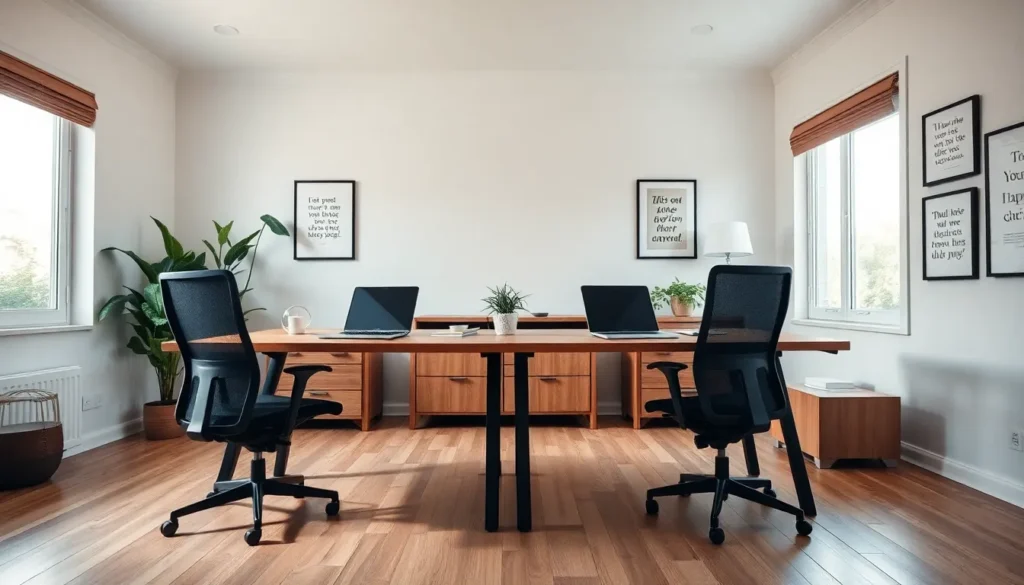
Warm neutrals work in nearly any light condition and coordinate with most furniture. The trade-off: they’re less “bold” visually, so if your office feels small or you want visual impact, you may need to rely on accessories, artwork, or a complementary accent wall. Test samples labeled “warm gray” carefully, some lean slightly green or purple, which can look off under certain bulbs. Look at samples under your actual office lighting, not in the paint store. A two person desk or small desk in natural wood complements warm neutrals beautifully.
Creating Balance With Accent Colors
An accent wall, typically the wall behind your desk or the one facing you during video calls, adds visual interest and focus without overwhelming the room. Soft sage, muted charcoal, or a deeper blue on a single wall creates depth and helps define your workspace within a larger room.
The key is restraint. A bold accent wall works only if the other three walls are neutral or very pale. If you’re unsure about committing to color, paint three walls a soft neutral and test the accent color on the fourth wall for 1–2 weeks. You can always repaint if it feels wrong. Keep trim and doors in white, cream, or a contrasting neutral to frame the accent cleanly.
An accent wall also solves the small-space problem. In a cramped office, painting one wall a darker or richer tone makes that wall appear to recede, visually enlarging the room. Interior designers often recommend this strategy for home office ideas for small spaces where every square foot counts. Avoid painting the wall opposite your window a dark color, as it will absorb light and darken the entire room. Paint the wall perpendicular to windows for a balanced effect.
Practical Tips for Choosing and Testing Paint
Start by collecting paint swatches from trusted manufacturers, Benjamin Moore, Sherwin-Williams, Behr, and Farrow & Ball all offer extensive office-friendly palettes. Bring swatches home and tape them to your wall in different lighting conditions. Morning light, afternoon glare, and evening artificial light will make the same swatch look dramatically different.
Buy a sample quart (about $5–8) before committing to a full gallon. Paint a 2×3-foot section on your wall and observe it for 2–3 days. Notice how it looks under your desk lamp, in natural light, and next to furniture and flooring you already own. A color that looked perfect at 9 a.m. may feel wrong by 5 p.m. under different lighting.
Consider the finish: matte hides flaws but marks easily: eggshell offers slight sheen and durability: satin gives a soft shine and cleans well. For office walls that might get marked or dusty, satin is the practical choice. One gallon of paint covers roughly 350 square feet: most home offices need 2–3 gallons for two coats. Budget $30–60 per gallon for quality interior paint, plus primer ($20–40 per gallon) if you’re covering bold existing color or stained walls.
If you’re renting or hesitant about permanent color, look into self-adhesive peel-and-stick wall panels that mimic paint finishes. They’re not ideal for long-term durability, but they’re renter-friendly and removable. For renters committed to a temporary change, ask your landlord in writing before painting, most will accept neutral colors if you agree to repaint before moving.
How to Paint Your Home Office Like a Pro
Preparation is 80% of the job. Clear the room of furniture or push everything to the center and cover it with plastic sheeting. Remove outlet and switch covers, lay drop cloths (canvas, not plastic, it’s slippery), and use painter’s tape along trim, ceiling edges, and any adjacent walls. Press tape firmly with a putty knife: poor tape application leads to bleeding edges and frustrating touch-ups.
Inspect walls for holes, dents, or previous stains. Fill small holes with spackling compound, sand smooth when dry, and prime over stains (water marks, smoke, or crayon marks require shellac-based primer or they’ll bleed through). Let primer dry fully, usually 1–2 hours, before painting.
Use a quality brush (2–3 inches) for trim and edges, and a 9-inch roller with a medium nap (3/8 inch) for large wall areas. Cheap rollers shed fibers and leave a rough finish. Pour paint into a roller tray, load the roller evenly, and apply paint in overlapping W or M patterns, then fill in vertically. Two thin coats cover better than one thick coat and dry faster. Allow 2–4 hours between coats (check the can), then remove tape while paint is slightly tacky, this prevents the tape from peeling dried paint off the wall.
Work with proper ventilation: open windows and use a fan to circulate air, even with low-VOC paint. Wear safety glasses, a dust mask, and gloves when rolling, paint splatter into eyes is painful and dangerous. If you’re painting a room you’ll work in daily, plan to paint on a Friday evening so the room airs out overnight. Most interior paint has minimal odor within 24 hours, but full cure (hard finish) takes 1–2 weeks before the wall can handle scuffs. Avoid leaning furniture against freshly painted walls for at least three days.
Conclusion
The best home office paint color is the one that supports your work style and mental state. Whether you choose calm blue, warm taupe, or a soft accent tone, the key is testing before committing and preparing your walls properly. Paint is affordable, reversible, and transformative, making it one of the highest-ROI improvements you can make to your workspace. Measure twice, paint once, and enjoy a room that works as hard as you do.