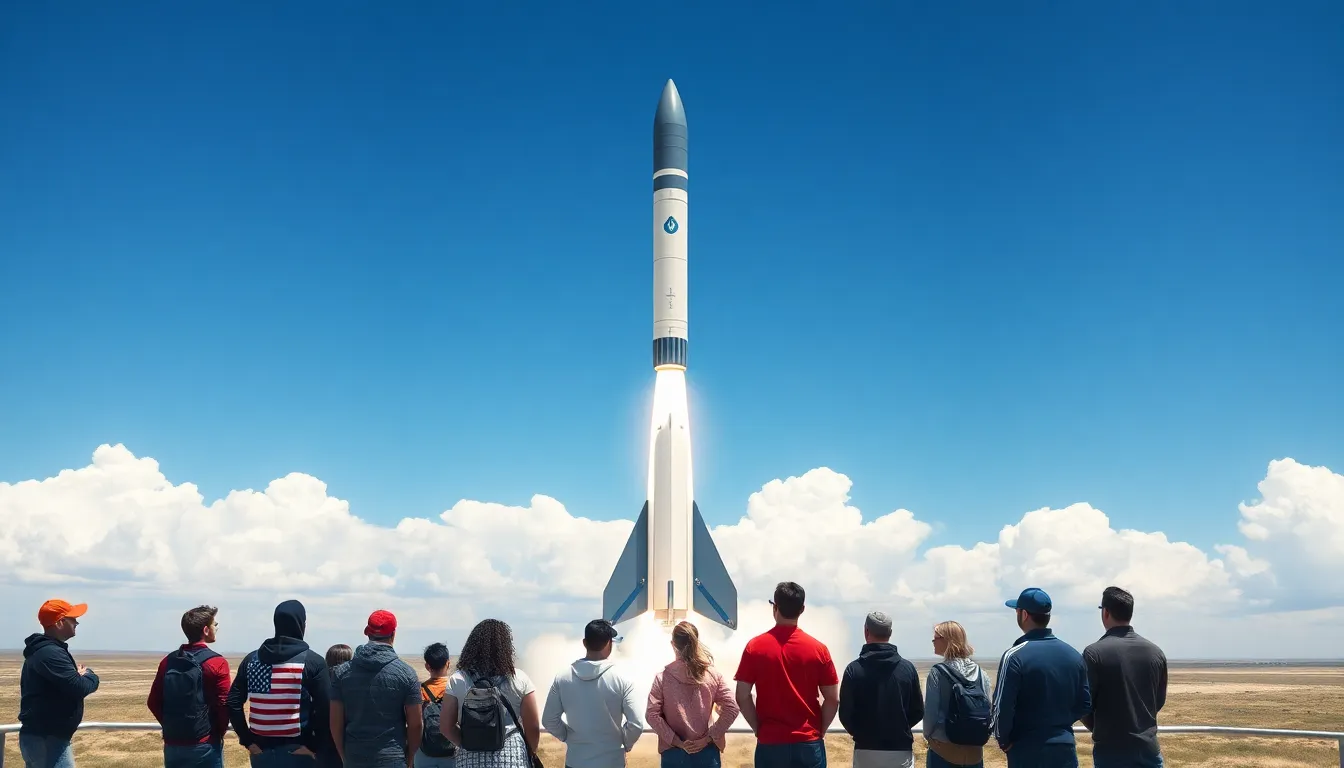

Blue Origin isn’t just a name; it’s a ticket to the stars—or at least a really high view of Earth. Founded by Jeff Bezos, this aerospace company has made headlines with its ambitious suborbital flights. But just how high does Blue Origin actually soar? Spoiler alert: it’s not just a hop, skip, and a jump.
Table of Contents
ToggleOverview of Blue Origin’s Flights
Blue Origin specializes in suborbital flights designed to provide stunning views of Earth. The New Shepard vehicle, its flagship spacecraft, climbs to an altitude of approximately 62 miles, crossing the Kármán line, which is widely recognized as the boundary of space. These flights typically last about 10 to 11 minutes, offering passengers a brief but exhilarating experience of weightlessness.
The rocket’s design features reusable components, minimizing costs and enhancing sustainability within space exploration. Each flight can accommodate up to six passengers, giving individuals a chance to experience the incredible view of the planet below. Blue Origin’s focus on safety remains paramount, with the New Shepard holding a solid track record of successful missions since its first crewed flight in July 2021.
High-altitude flights attract attention due to their unique blend of thrill and accessibility. Blue Origin’s competitive pricing encourages more people to consider the experience. Many future flights are in the planning stages, promising to build upon the success of previous missions. This approach enhances public interest in commercial space travel, as more individuals see a path to participating in such adventures.
Scheduled flights occur regularly, demonstrating Blue Origin’s commitment to expanding accessible space exploration. By offering a blend of education and excitement, the company fosters a deeper understanding of space among participants. Overall, Blue Origin plays a vital role in pioneering suborbital travel, capturing the imagination of space enthusiasts worldwide.
The New Shepard Rocket
The New Shepard rocket, designed by Blue Origin, serves as a crucial component of suborbital missions. It aims to provide an unparalleled experience for passengers, combining adventure with a focus on safety and sustainability.
Flight Profile and Objectives
Each New Shepard flight lasts around 10 to 11 minutes, offering a brief yet exhilarating journey. The primary objective involves exposing participants to microgravity and stunning views of Earth. Passengers ascend rapidly, reaching peak altitudes while experiencing the thrill of weightlessness. Blue Origin emphasizes the importance of safety, showcasing a strong track record since its first crewed flight in July 2021. Reusability constitutes another key goal, significantly reducing costs and fostering sustainability in space travel.
Maximum Altitude Achieved
The New Shepard consistently reaches approximately 62 miles, surpassing the Kármán line. This altitude is widely recognized as the boundary of space, allowing passengers to experience a unique perspective of Earth. Each ascent and descent offers an opportunity to view the curvature of the planet and the vastness of space. Blue Origin’s achievements with the New Shepard push the limits of commercial space exploration, captivating the imaginations of future astronauts. The rocket’s impressive altitude elevates the standard for suborbital flights, marking a significant milestone in the industry.
Comparison with Other Space Flights
Blue Origin’s New Shepard achieves significant altitudes, but its focus differs from traditional orbital flights.
Suborbital vs. Orbital Flights
Suborbital flights, like those conducted by Blue Origin, reach around 62 miles above Earth, crossing the Kármán line. Passengers experience brief weightlessness and stunning views for about 10 to 11 minutes. In contrast, orbital flights involve reaching higher altitudes, typically 100 to 200 miles, allowing spacecraft to orbit Earth for extended periods. SpaceX’s Crew Dragon demonstrates orbital capabilities, with missions lasting hours to days, enabling more extensive scientific research. The differences in flight duration and experience highlight the unique offerings of both suborbital and orbital missions.
Notable Spacecraft Comparisons
New Shepard serves as a benchmark among suborbital spacecraft, prioritizing safety and reusability. SpaceX’s Crew Dragon excels in orbital maneuvers, supporting NASA missions and commercial trips. Virgin Galactic’s VSS Unity also competes in the suborbital arena, achieving similar altitudes, yet it employs a different flight mechanism using a carrier aircraft. Both Blue Origin and Virgin Galactic offer short experiences in space, while Crew Dragon offers longer missions with more complex objectives. Each vehicle contributes uniquely to the evolving landscape of commercial space travel.
Future Prospects for Blue Origin
Blue Origin aims to expand its influence in commercial space travel, focusing on upcoming missions and future altitude aspirations.
Upcoming Missions
Blue Origin plans multiple missions to enhance its suborbital experience. Each mission features the New Shepard rocket, which serves as a vehicle for tourism and scientific research. Scheduled flights in the coming years promise to attract a diverse range of participants, from space enthusiasts to researchers. The emphasis on regular, safe, and reusable flights invites growing public interest in high-altitude experiences. Regularly releasing flight schedules encourages adventurers to participate, allowing them to experience brief yet unforgettable journeys into space.
Potential Altitude Goals
Future missions could include aspirations to achieve higher altitudes beyond the Kármán line. Goals may involve increasing the New Shepard’s altitude capabilities to reach 70 or 80 miles, enhancing passenger experiences. Achieving these aspirations would solidify Blue Origin’s competitive edge in suborbital travel. Enhanced altitudes could also facilitate new scientific experiments that require varied microgravity conditions. By actively pursuing these advancements, Blue Origin seeks to redefine the boundaries of commercial suborbital missions while inspiring future endeavors in space exploration.
Blue Origin’s commitment to suborbital flight is reshaping the landscape of commercial space travel. By reaching altitudes of around 62 miles, the New Shepard offers a thrilling glimpse into the wonders of space while ensuring safety and sustainability. As the company looks to the future, plans for enhanced capabilities and regular flight schedules promise to make these extraordinary experiences more accessible.
With each mission, Blue Origin not only captivates the imagination of future astronauts but also paves the way for scientific exploration. The journey has just begun, and the potential for new heights continues to inspire excitement and curiosity about what lies beyond Earth.