When it comes to precision, diameter measuring tools are the unsung heroes of the measurement world. They might not wear capes, but they sure save the day—especially when it’s time to ensure that perfect fit. Whether you’re crafting a masterpiece in your workshop or just trying to figure out if that new plant pot will fit on your shelf, these tools have got your back.
Overview of Diameter Measuring Tools
Diameter measuring tools provide precision in various fields, including manufacturing, engineering, and woodworking. These tools measure the width of circular objects, ensuring components fit accurately in assemblies.
Calipers represent one common type of diameter measuring tool. These instruments can include features for both external and internal measurements, accommodating diverse project requirements. Digital calipers often exhibit LCD displays for easy reading.
Micrometers serve another option for precise measurements. Typically used for smaller diameters, these tools offer exceptional accuracy, often down to one-thousandth of a millimeter. Using a micrometer can help verify the specifications of mechanical parts.
Furthermore, dial gauges provide a different approach to measuring diameter. These tools often feature a dial indicator that shows measurements in real time. Operators appreciate the immediate feedback available with dial gauges.
Laser diameter measuring tools introduce advanced technology into the measurement process. These devices use laser beams to calculate diameters without physical contact. As such, they minimize the risk of damaging delicate items during measurement.
Ring gauges offer an alternative solution for ensuring specific diameters. Constructed in fixed sizes, these gauges check the fit of components against predetermined standards. Their simplicity and effectiveness make them valuable for quality control.
The variety of diameter measuring tools caters to different requirements across industries. Users prioritize accuracy and ease of use when selecting tools for specific applications. Overall, diameter measuring tools significantly contribute to achieving precise results in any project involving circular objects.
Types of Diameter Measuring Tools
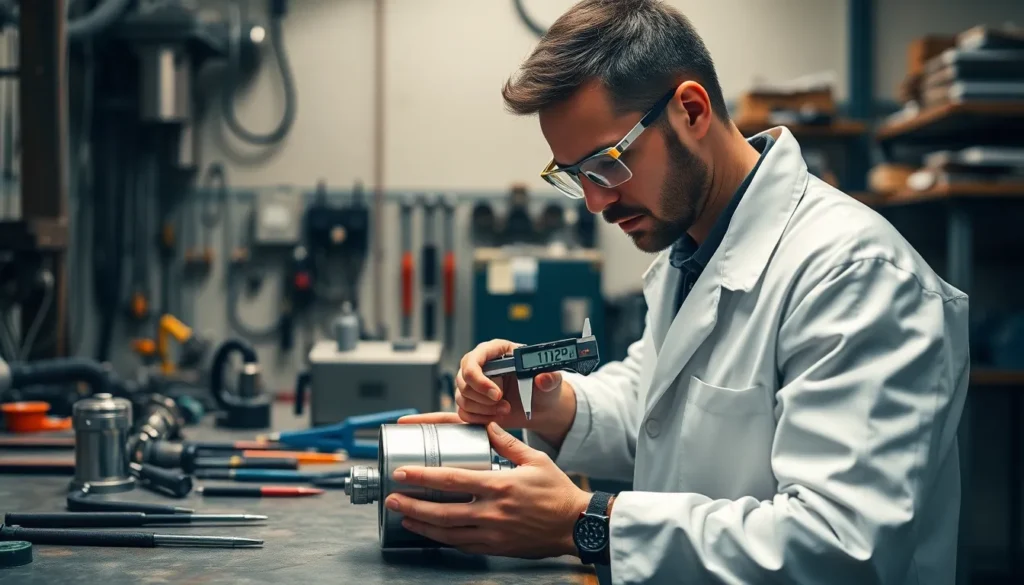
Diameter measuring tools come in various types, each designed for specific applications in precise measurements. Understanding these tools allows users to select the best option for their needs.
Calipers
Calipers measure external, internal, and depth dimensions accurately. They come in manual and digital versions, offering varying precision levels. While manual calipers require visual reading, digital calipers provide quick, easy-to-read measurements. Calipers are particularly useful in woodworking, machining, and metalworking. The versatility of calipers enables them to measure a wide range of diameters, making them common in many workshops.
Micrometers
Micrometers excel in measuring small diameters with high accuracy. They feature a screw mechanism that allows for precise measurements, typically to within one-thousandth of an inch or a hundredth of a millimeter. Available in external, internal, and depth types, micrometers cater to different measurement needs. Their robust construction often suits them for industrial applications, where precision is crucial. Many professionals trust micrometers for detailed measurements in engineering and manufacturing.
Diameter Gauges
Diameter gauges specialize in quickly assessing the diameter of cylindrical objects. These gauges feature a fixed measurement point and an adjustable arm that aligns with the object being measured. Users appreciate their efficiency in quality control processes, minimizing the time spent on each measurement. Available in both analog and digital formats, diameter gauges offer flexibility in use. Many industries rely on diameter gauges to maintain product consistency and quality standards.
Applications of Diameter Measuring Tools
Diameter measuring tools are vital in various fields, ensuring precision in measurements for different tasks. Their applications range from manufacturing processes to strict quality control.
Manufacturing
In manufacturing, diameter measuring tools play a crucial role in maintaining product quality. They ensure components meet specifications, enhancing fit and functionality. Calipers and micrometers measure dimensions during the production stage, verifying that parts are within tolerance. Precision in machining relies on dial gauges, aiding operators in achieving exact cuts and shapes. Laser measuring devices offer non-contact measurement for delicate items, streamlining workflows. Using these tools reduces waste and rework, ultimately improving efficiency and productivity in manufacturing environments.
Quality Control
Quality control processes heavily depend on diameter measuring tools for accurate assessments. These tools facilitate quick evaluation of products during inspection phases. Diameter gauges help identify defects by measuring cylindrical objects swiftly, ensuring compliance with standards. Regular checks with calipers and micrometers guarantee products maintain required tolerances. In addition, using calibrated tools throughout production helps uphold consistency. Ensuring accuracy in quality control fosters customer satisfaction and builds trust in product reliability.
Advantages of Using Diameter Measuring Tools
Diameter measuring tools provide numerous benefits across various fields. Precision stands as a primary advantage, as these tools ensure measurements are accurate down to the smallest detail. Micrometers, for example, excel in capturing tiny dimensional changes, essential in sectors like manufacturing and engineering.
Efficiency increases significantly when using diameter gauges. These tools enable quick assessments of cylindrical objects, streamlining the quality control process. Operators complete inspections swiftly while maintaining accuracy, significantly reducing downtime during production.
Versatility in applications highlights another advantage. Calipers adapt to a range of tasks, allowing users to measure internal, external, and depth dimensions effectively. This flexibility proves beneficial for professionals working on different projects, from woodworking to mechanical engineering.
User-friendliness also plays a critical role. Digital calipers and laser measuring devices present intuitive interfaces that simplify the measuring process. This accessibility increases productivity, as users spend less time deciphering complex measurements.
In addition, regular use of calibrated diameter measuring tools fosters consistency. Routine checks against set standards minimize measurement deviations, ensuring components meet specifications time after time. This reliability enhances customer satisfaction, reinforcing trust in products.
Cost-effectiveness emerges as another notable advantage. Owning quality diameter measuring tools can reduce the need for rework, defects, and wasted materials. Savings accumulated over time can significantly impact a company’s bottom line.
Overall, diameter measuring tools are indispensable for ensuring precision, efficiency, versatility, and user-friendliness in various applications. Their importance resonates deeply in dedicated fields, where quality and accuracy are non-negotiable.
Tips for Choosing the Right Diameter Measuring Tool
When selecting a diameter measuring tool, consider the specific application. Precision is crucial, so identify whether the task requires high accuracy or quick estimations. Evaluate the environment in which the tool will be used; industrial settings might benefit from robust options like micrometers, while woodworking projects may suit calipers.
Assess the size range of the diameter. Tools like calipers accommodate a variety of sizes, while specialized gauges excel with specific dimensions. Verify whether the tool provides digital readouts or if manual measurements fit the user’s preferences. Digital models often enhance ease of use, especially for those who need quick readings.
Think about the material of the tool. Stainless steel calipers resist corrosion, ensuring durability in various conditions. Compare different brands and models for build quality; reputable manufacturers often deliver reliable accuracy.
Review additional features. Some tools include data output options, which aid in recording measurements for further analysis. Check for calibration capabilities, as regular checks maintain accuracy and extend the tool’s lifespan.
Consider ergonomic aspects as well. A tool that feels comfortable in hand ensures a steady grip, enhancing precision during measurements. Weight and balance play significant roles; lightweight materials provide ease of use without compromising durability.
Finally, match the tool’s cost to its expected use. Higher-priced options may deliver better performance and longevity, particularly in professional settings. With these considerations, choosing the right diameter measuring tool becomes a streamlined process, ensuring accuracy and efficiency in various applications.
Diameter measuring tools are vital for achieving precision in various fields. Their diverse applications ensure that tasks ranging from manufacturing to woodworking are completed with accuracy and efficiency. By selecting the right tool for specific needs, users can enhance productivity and maintain high standards in quality control.
Investing in quality measuring tools not only improves measurement consistency but also contributes to long-term cost savings by minimizing waste and rework. As technology advances, the options available continue to grow, providing even more opportunities for precise measurements. Ultimately, understanding the importance and functionality of these tools is key to successful project outcomes.