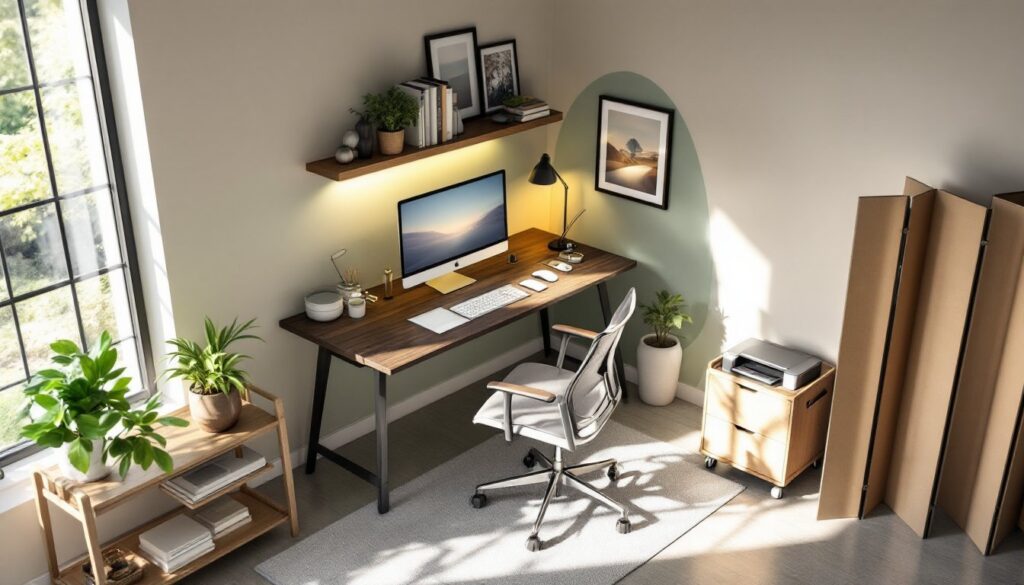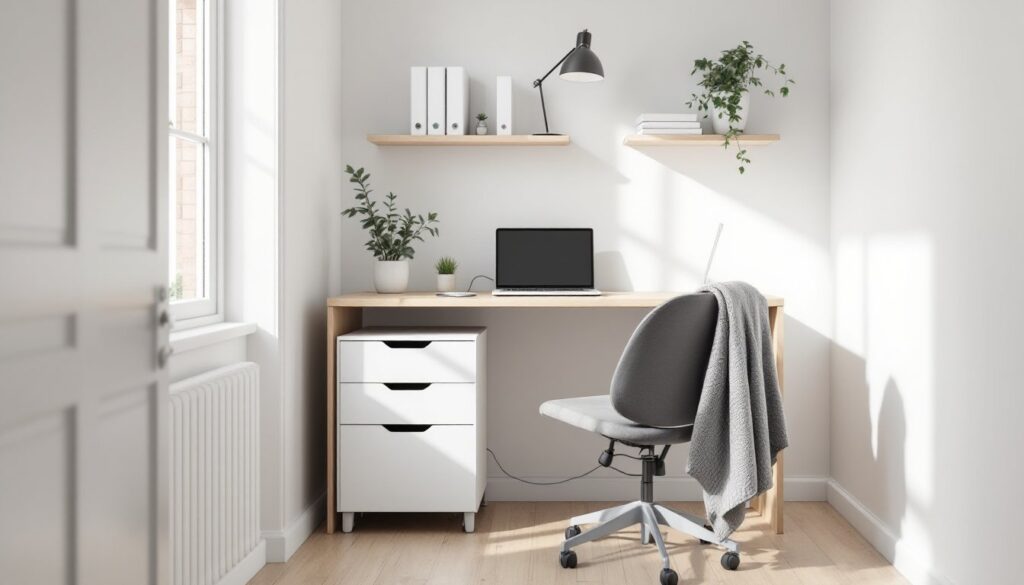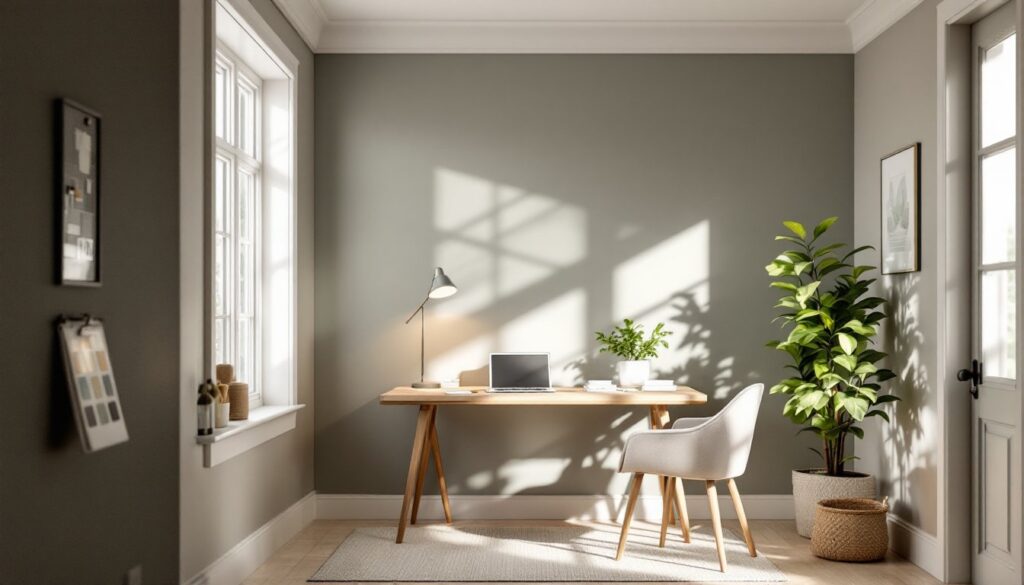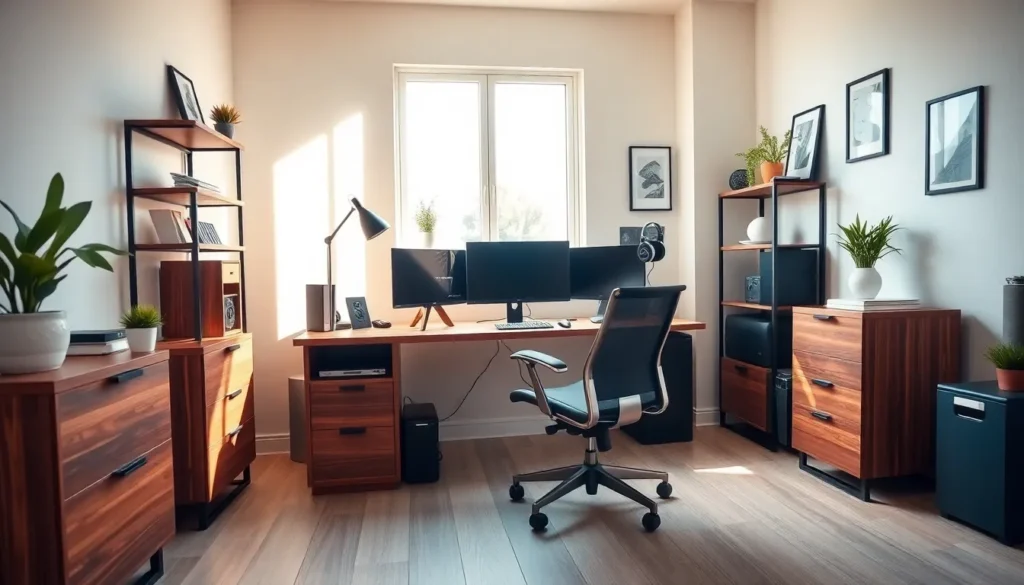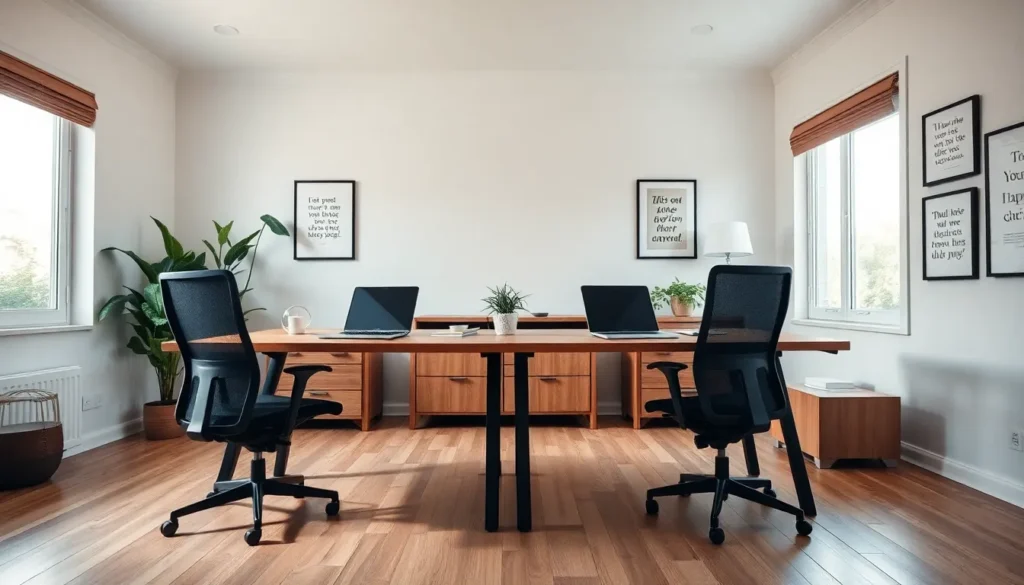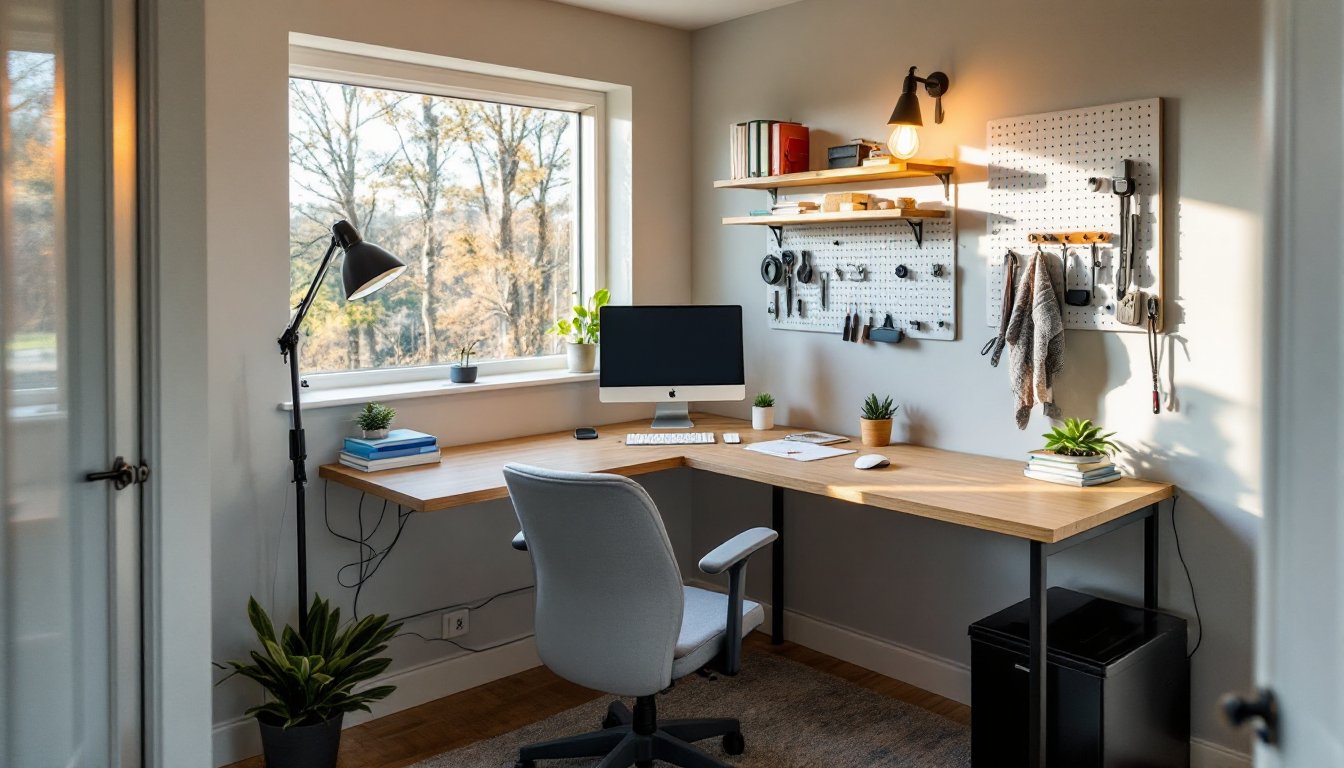

A 10×10 home office is tight, roughly the size of a bedroom corner or a generous closet. But square footage doesn’t dictate productivity. The right layout transforms that constraint into a focused, efficient workspace where everything you need lives within arm’s reach. Whether you’re squeezing a desk into a corner, working with a partner, or just want to carve out quiet space from a busy household, this guide walks you through five proven layouts that work in real homes, not just design magazines. The trick isn’t buying more stuff: it’s placing what you have strategically and using vertical space like it owes you money.
Table of Contents
ToggleKey Takeaways
- An L-shaped desk layout maximizes a 10×10 home office by anchoring corners and providing dual work surfaces while preserving a 5-foot center aisle for movement and flow.
- Vertical wall storage—shelving, pegboards, and floating shelves—reclaims floor space in tight home office layout ideas by utilizing 400 square feet of wall space versus only 100 square feet of floor.
- A minimalist single-desk setup with intentional furniture choices ($600–$1,400) works best for solo workers, featuring one desk, a quality chair, a monitor arm, and essential storage that keeps floors clear.
- Multi-functional furniture like standing-desk frames and murphy desks eliminate the need for extra pieces, though murphy desks require discipline and clear daily habits to be effective.
- Strategic lighting (natural light, task lights, and ambient layers), ergonomic positioning, and cable management are critical to comfort and productivity in a compact 10×10 office space.
The L-Shaped Desk Setup for Corner Efficiency
An L-shaped desk anchors itself in a corner, say the junction of two exterior walls or inside a closet space, and gives you two work surfaces without eating the center of the room. One side handles your primary work (computer, monitor arm, keyboard tray), while the perpendicular section accommodates paperwork, a phone, or a second monitor for reference materials.
The real win: you’ve claimed the corner, which might otherwise sit empty or become a dust trap. A standard L-desk footprint runs roughly 5 feet by 5 feet per arm, leaving you a 5-foot-wide aisle down the center for your chair to roll and for someone to pass through.
When picking an L-desk, check the actual depth (usually 20–24 inches deep, 48–60 inches long per side). Measure your corner clearances and doorswing radius. A corner space with a light source, window or a directed task light, is ideal. Home office ideas for small spaces often rely on this layout because it’s modular: if you later change jobs or work style, you can replace one arm or remove a section entirely.
Vertical Storage Solutions to Reclaim Floor Space
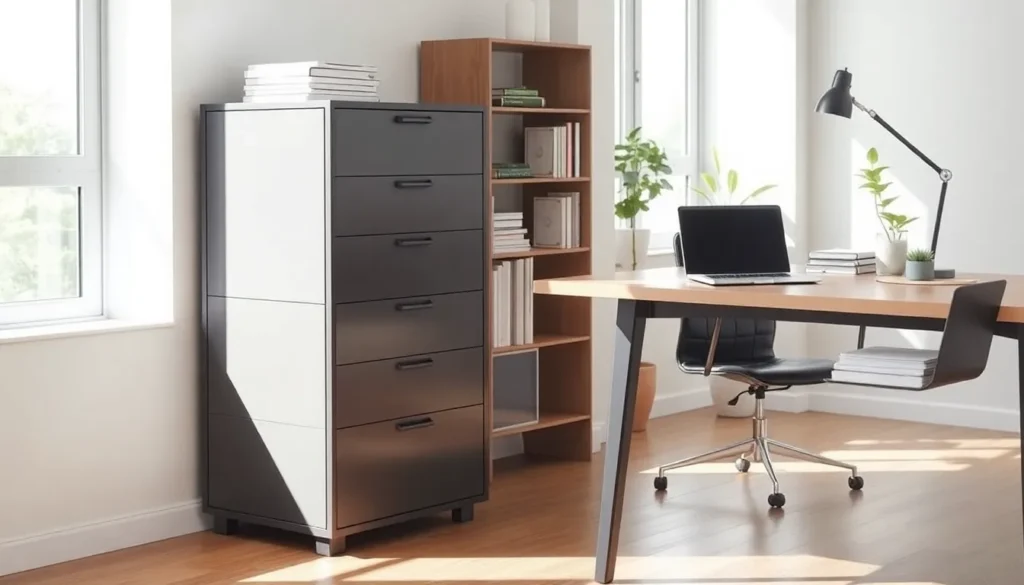
A 10×10 box has 100 square feet of floor and 400 square feet of wall. Use the walls. Every filing cabinet, shelf, or bin you hang overhead is square footage you’re not wasting on the floor, where it eats movement space.
Start by auditing what you actually store: reference books, binders, cables, stationery, archived files, printer paper. How much is truly daily-access, and how much is occasional backup? Daily items go within your reach arc (desktop, first shelves). Everything else goes higher or deeper.
Wall-Mounted Shelving and Pegboards
Wall-mounted shelving, either floating shelves (cleaner look, mounts direct to studs) or bracket-and-shelf combos (easier to adjust), runs $15–50 per shelf, depending on depth and load rating. A 3-foot-wide shelf rated for 50 pounds will hold a row of binders, a framed photo, and a small speaker without flex.
For cable chaos and small tools, a pegboard mounted above or beside your desk works fast. Paint-grade pegboards are $20–40: hooks and baskets another $30–60 total. The strategy: pegboards are honest about clutter. If you hang it, you’ll see mess. This forces discipline, only hang what you actually use weekly.
Another tip from real simple organization strategies: label everything. Unlabeled bins breed mystery junk. A label maker ($20–40) and consistent naming saves hours later. Wall-mounted shelving also creates visual boundaries in an open floor plan, giving your office a defined “edge” even in a shared room.
The Minimalist Single-Desk Layout
If you’re working solo and don’t need massive storage, strip it back. A single desk (48–60 inches), a good chair, a monitor arm, and three carefully chosen storage pieces are enough.
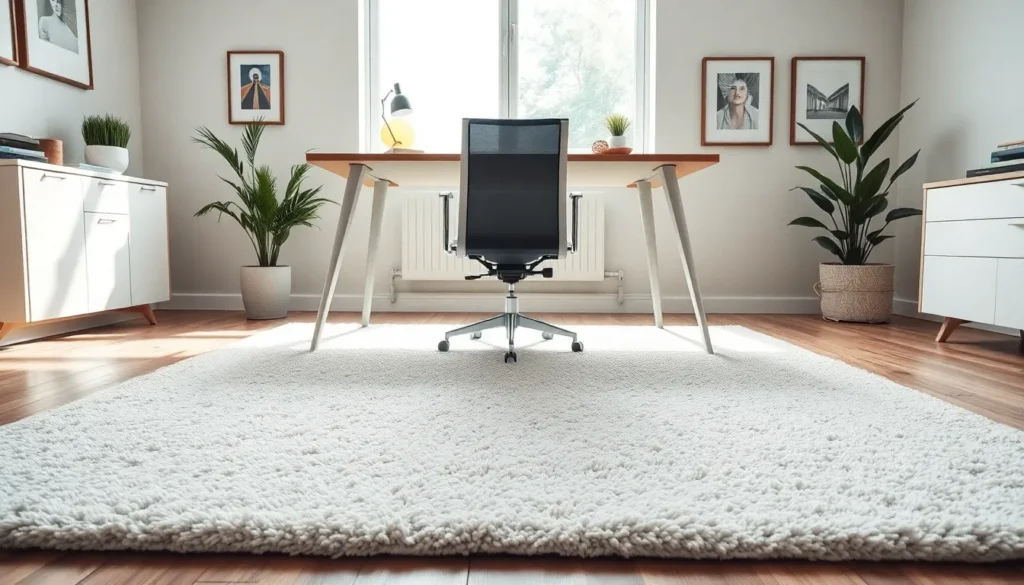
The minimalist office philosophy isn’t about looking austere: it’s about intentionality. Every item earns its place. A minimalist office setup in a 10×10 space means: one desk, one chair, one filing solution (maybe a two-drawer file cabinet under the desk), floating shelves for books or decor, and nothing else touching the floor except a home office rug (optional, but it anchors the space).
Position the desk perpendicular to a window or light source, not facing a blank wall. A monitor arm frees up desk surface and lets you dial in your view angle. Keep the floor clear: no cords sprawling, no paper piles, no “stuff to deal with later.” This layout works especially well if your room is also a guest bedroom or secondary living area, the office vanishes when closed.
Budget: a decent single desk ($200–500), a solid chair ($150–400), monitor arm ($50–100), one file cabinet ($100–200), and shelves ($100–200). Total: $600–1,400, depending on whether you go IKEA or mid-range quality.
Multi-Functional Furniture for Small Spaces
Multi-functional doesn’t mean “does ten things poorly.” It means each piece pulls double duty without compromise.
A standing-desk frame with a simple top is one example: you adjust height, which improves circulation and lets you shift posture throughout the day. Same footprint as a fixed desk, plus a health win. Another: a storage credenza that doubles as a plant stand or a monitor riser. A shelving unit with cubby storage can hold your desk supplies and display plants or books.
Murphy Desks and Fold-Away Workstations
If your 10×10 must pull triple duty (office, guest room, craft space), a Murphy desk, a desktop that hinges down from the wall and disappears, is the nuclear option. The best versions ($400–1,000+) use quality hardware and don’t sag or jam. IKEA Hackers has countless examples of DIY versions using floating shelves and hinged tops built for under $200.
The reality: Murphy desks look cool but require discipline. If you’re messy, you’ll resent clearing the desk at day’s end. If you’re organized, this layout is brilliant. Measure your wall height (you need 12+ inches clearance below a wall cabinet for knee space when the desk drops down). Check that a 24-inch-deep desktop doesn’t jut into foot traffic.
Alternative fold-away: a simple half-height desk console (28–30 inches high, 36–48 inches wide) that tucks between wall studs or fits in a closet alcove. Pair it with a drafting stool rather than a full office chair to save floor space. This setup costs $150–400 and feels less committal than a Murphy desk if you’re unsure.
Lighting and Ergonomics in a Compact Space
Poor lighting ruins a small office faster than clutter. Natural light is ideal, position your desk perpendicular to a window, not facing it (glare) or with your back to it (shadow on your work). If you don’t have a window, or if afternoon light shifts, layer three types of light: ambient (ceiling fixture or soft overhead), task (a desk lamp or monitor-mounted light), and accent (corner uplighter to reduce contrast).
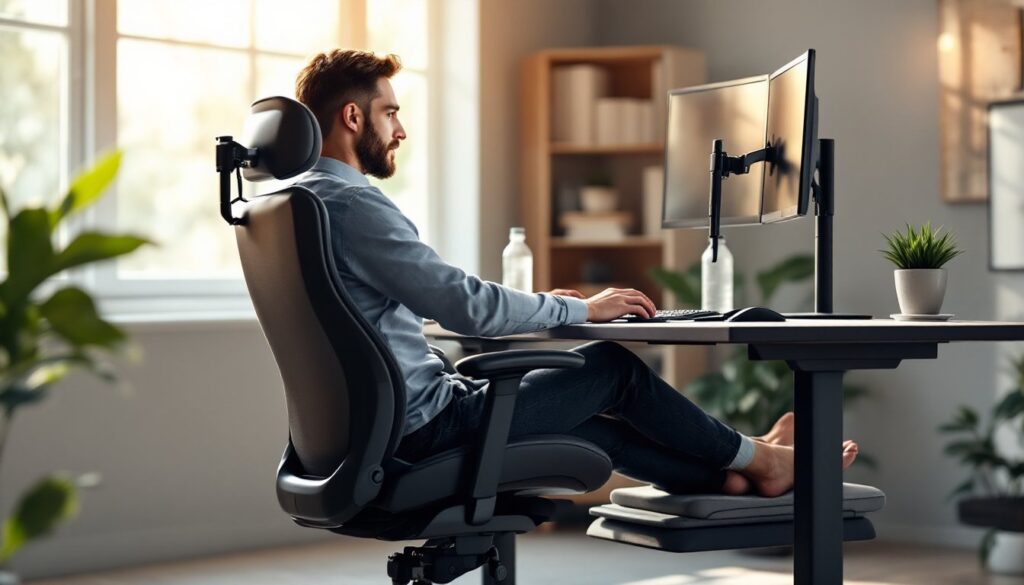
A monitor arm is non-negotiable in a 10×10 office. It costs $50–150, frees up 2–4 square feet of desk surface, and lets you position the screen at eye level (top of screen at or slightly below eye height when seated). This prevents neck strain and makes the desk feel less cramped because you’re not hunching forward.
Chair height matters: feet flat on floor, knees at 90 degrees, elbows at 90 degrees while typing, wrists neutral. In a small space, a task chair that adjusts height, tilt, and lumbar support ($150–350) saves your back over an IKEA budget stool. Test it if possible, your spine isn’t a place to gamble.
Cable management: use a cable tray mounted under the desk, spiral wrap, or adhesive clips to run wires along the edge rather than dangling. Small desks for home office layouts depend on tight organization, sloppy wires make a space feel smaller and tangled.
Temperature and noise: a 10×10 room can feel stuffy if sealed. Crack a window or use a small USB fan in summer. For acoustic isolation, a thick rug and soft wall hangings muffle echoes and outside noise. If you’re on a video call often, test your audio: a cheap USB microphone ($30–60) is worth it if your laptop mic picks up keyboard clatter or HVAC noise.