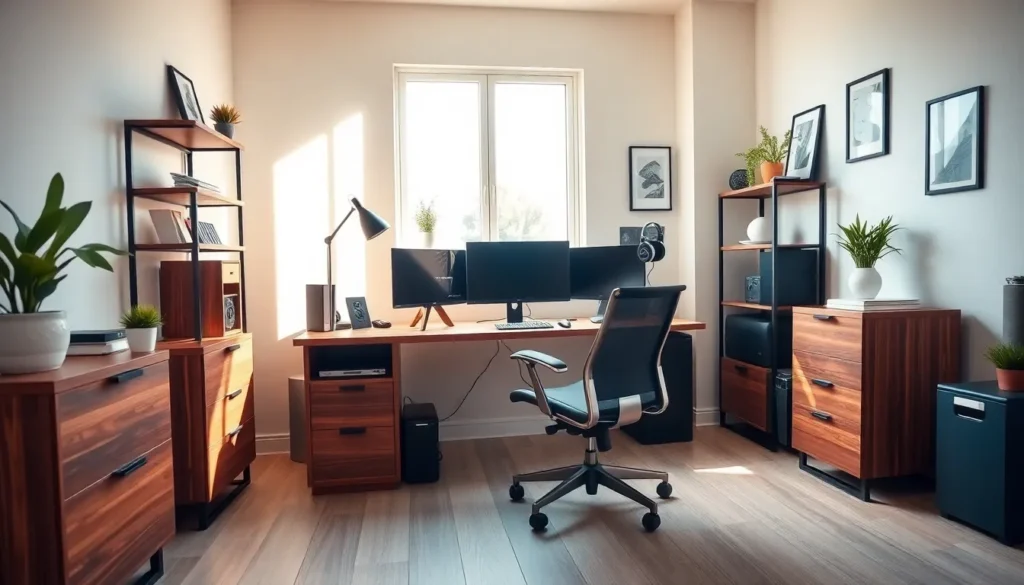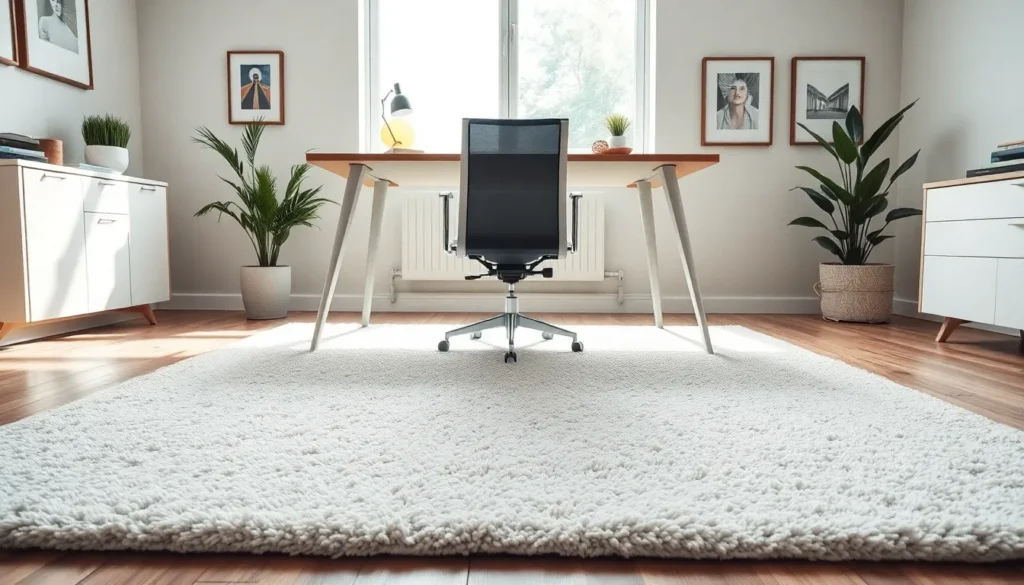

In a world overflowing with distractions, the minimalist office emerges as a beacon of sanity. Imagine a workspace where clutter takes a backseat, and productivity gets the driver’s seat. It’s not just about fewer items on your desk; it’s about creating an environment that sparks creativity and focus. Who knew that less really could be more?
What Is a Minimalist Office?
A minimalist office focuses on simplicity and functionality, creating a calm and efficient workspace. This design approach reduces distractions and encourages productivity.
Key Principles of Minimalism
Clutter reduction stands as a core principle of minimalism. Items in a minimalist office should serve a clear purpose or provide value. Open spaces promote a sense of tranquility, helping maintain focus. Neutral color palettes contribute to a clean aesthetic, while natural light enhances mood. Prioritizing high-quality furniture and tools over excessive accessories ensures a streamlined environment.
Benefits of a Minimalist Office
Increased productivity often results from a minimalist office. Workers encounter fewer distractions, allowing for deeper concentration. Clear workspaces foster creativity and innovation; simplicity encourages fresh ideas. Stress reduction frequently occurs when environments are uncluttered; serene surroundings promote mental clarity. Enhancing organization not only saves time but also improves efficiency—a well-arranged space leads to smoother workflows.
Designing Your Minimalist Office
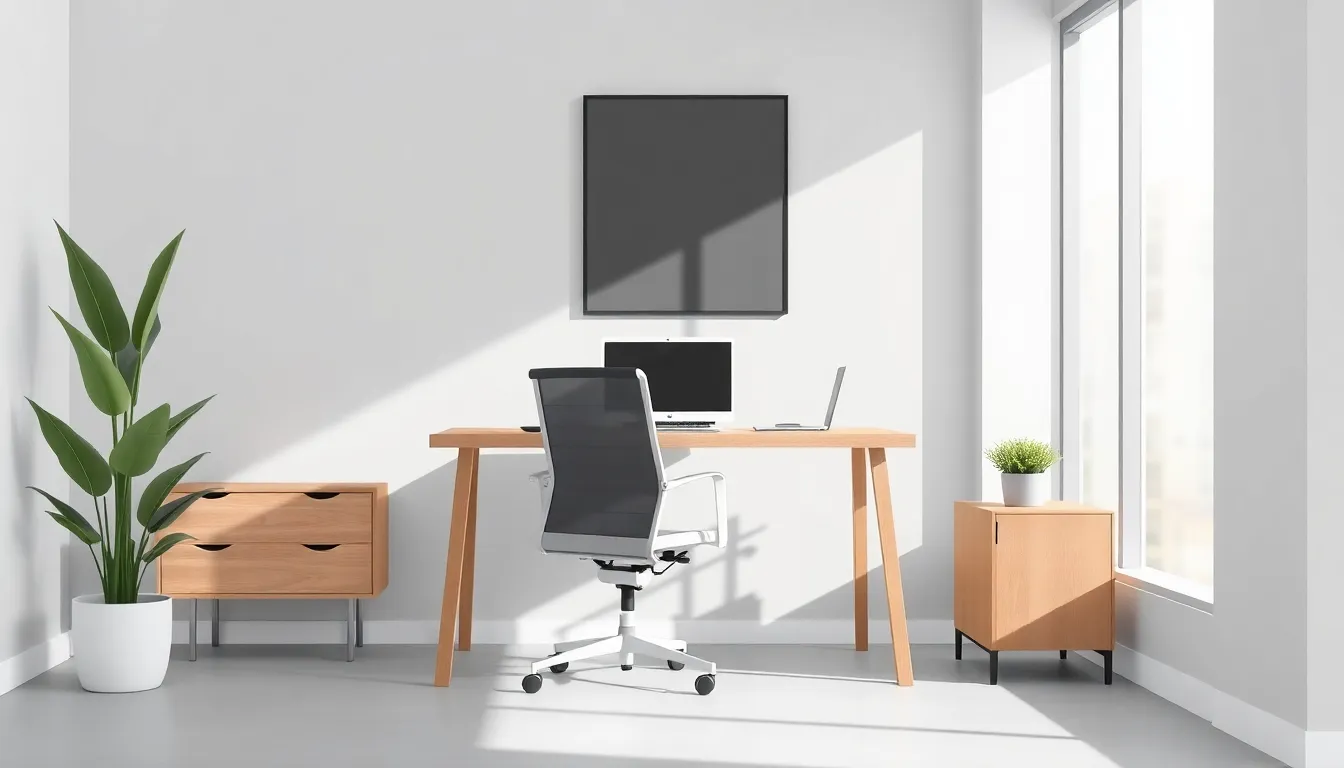
Creating a minimalist office involves thoughtful consideration of furniture choices and color schemes. Each element should contribute to a serene and functional workspace.
Choosing the Right Furniture
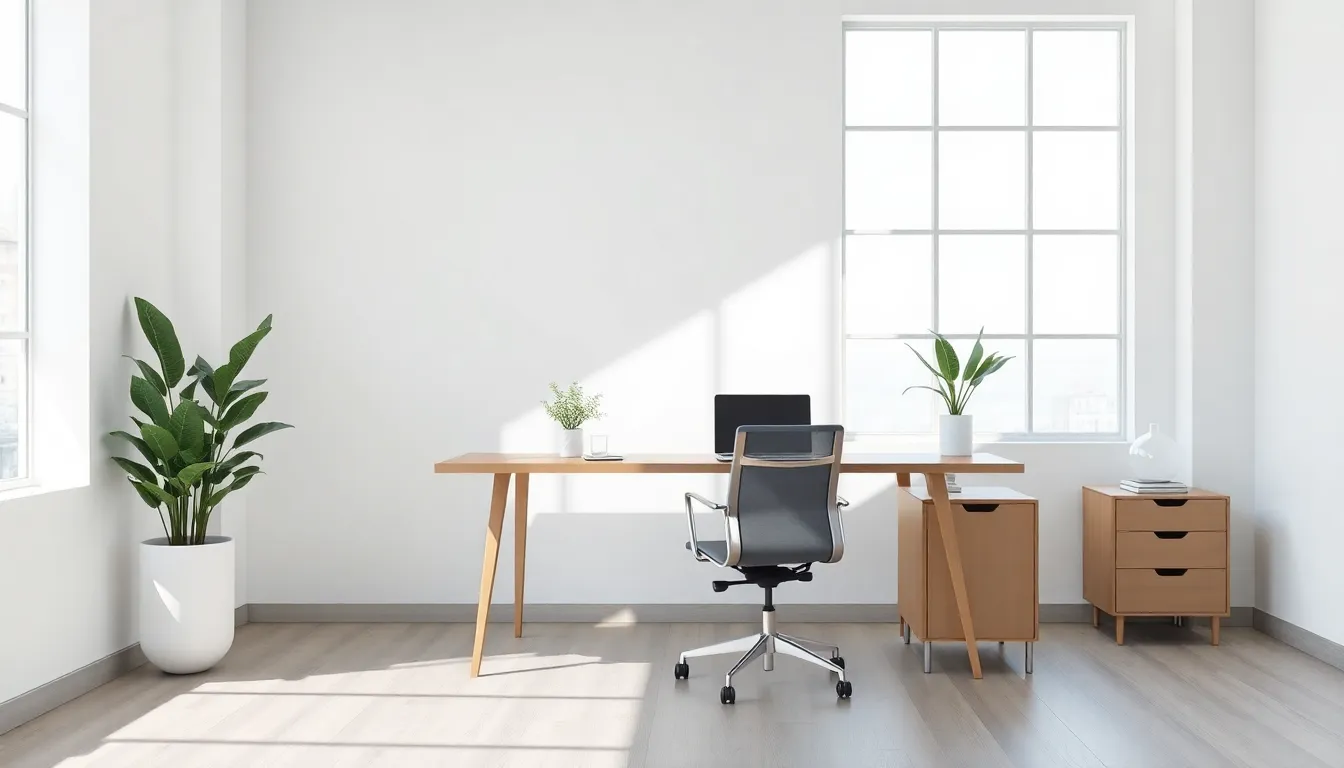
Select furniture that combines simplicity with functionality. Prioritize essential pieces like a streamlined desk and an ergonomic chair. Choose multi-functional items, such as a desk with storage or a folding chair for guests. Ensure the materials reflect durability and aesthetic appeal while avoiding excessive embellishments. Natural wood, metal, or glass surfaces often work best, providing a clean look. Keep the layout open to promote movement and minimize distractions.
Color Schemes and Decor
Opt for a neutral color palette to create a calming environment. Whites, grays, and soft earth tones enhance light and space perception. Use accent colors sparingly for visual interest, such as a single bright item like an artwork or plant. Minimalist decor should remain functional; consider selecting a few well-placed items that add character without overwhelming space. Incorporate natural elements, like plants or natural light, to foster a connection with the outdoors. Emphasizing simplicity allows for a more conducive atmosphere for creativity and productivity.
Organizing Your Workspace
A well-organized workspace enhances productivity and focus. Implementing effective organization strategies helps maintain a minimalist environment.
Decluttering Techniques
Start by assessing each item in the workspace. Keep only essential items that serve a clear purpose. Regularly schedule decluttering sessions to prevent accumulation. Utilize the “one in, one out” rule to maintain minimalism. Remove outdated documents and digital clutter periodically. Prioritize items that inspire creativity and functionality. Revisit workspace organization every few months to ensure it remains effective.
Efficient Storage Solutions
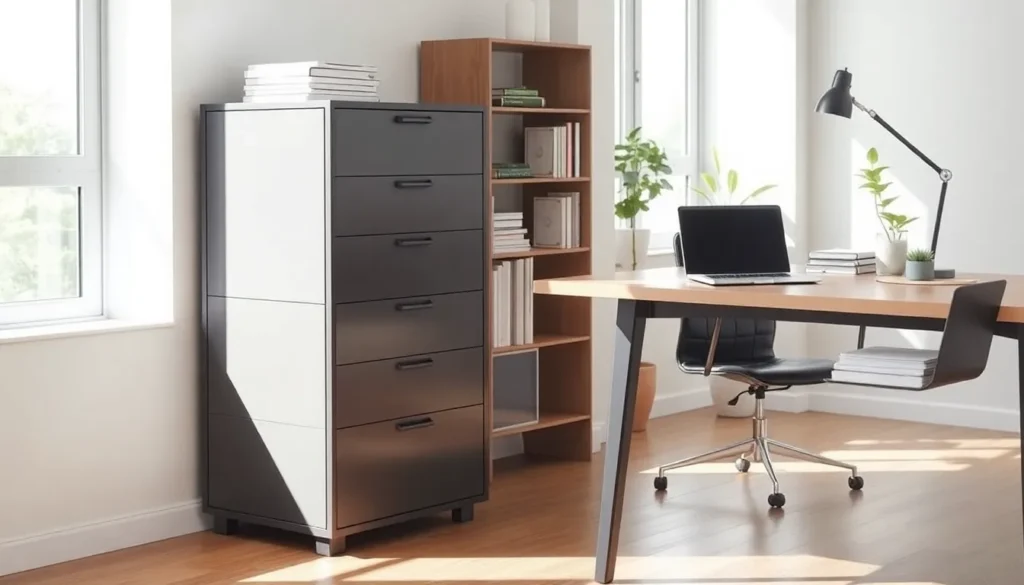
Consider vertical storage options to free up desk space. Use wall shelves to display essential items and minimize floor clutter. Invest in multi-functional furniture with built-in storage features. Utilize desk organizers to keep supplies accessible yet contained. Choose clear bins for easy visibility of contents, enhancing efficiency. Implement drawer dividers to categorize small items effectively. Keep frequently used supplies within arm’s reach for convenience during tasks.
Enhancing Productivity in a Minimalist Office
A minimalist office enhances productivity by reducing distractions and promoting clarity. A serene atmosphere allows for focused work.
Creating a Distraction-Free Environment
Establishing a distraction-free environment serves as a cornerstone of a minimalist office. Positioning the desk away from high-traffic areas minimizes interruptions. Utilizing soundproofing materials or soft background music also helps maintain concentration. Removing non-essential items, like excess paperwork or decorative objects, clears visual clutter. Keeping only essential tools encourages efficiency. Regular decluttering sessions further support this effort, ensuring the workspace remains tidy and functional. By adopting these strategies, productivity naturally increases as distractions decrease.
Incorporating Technology Mindfully
Incorporating technology mindfully is essential for a minimalist office. Choosing devices that enhance productivity, such as laptops and tablets, prevents workspace overcrowding. Prioritizing wireless options reduces cable clutter, promoting a clean aesthetic. Using software for project management and communication streamlines tasks and minimizes time spent on organizing materials. Setting boundaries for technology usage, like designated screen-free periods, encourages focus. Periodically assessing technology tools also ensures they’re necessary and effective for work processes. This approach fosters a harmonious balance between technology and minimalism, ultimately supporting productivity.
Embracing a minimalist office can transform the way individuals approach their work. By prioritizing simplicity and functionality, it creates an environment that enhances focus and creativity. The reduction of clutter not only streamlines workflows but also fosters a sense of calm, leading to reduced stress levels.
Thoughtful design choices and efficient organization strategies further support productivity. Incorporating natural elements and maintaining a neutral color palette can elevate the workspace’s atmosphere. Ultimately, a minimalist office is more than just an aesthetic choice; it’s a strategic approach to achieving greater efficiency and clarity in daily tasks.